Why Balance Matters
You've probably felt the difference: a meal that satisfies you for hours and keeps your energy steady, versus one that leaves you hungry and sluggish an hour later. That difference often comes down to whether a meal has the components your body uses — or is missing some of them.
Meals built around a single food group or heavy on highly processed items tend to leave you hungry again soon, cause energy dips, and over time create nutrient gaps. A balanced meal — one that includes protein, whole grains or starches, vegetables or fruit, and healthy fats — does the opposite: it sustains you.
Balance isn't about perfection. It's a pattern: most of your meals include these components, and the overall pattern across your day and week is what counts, not any single plate.
The Balanced Plate
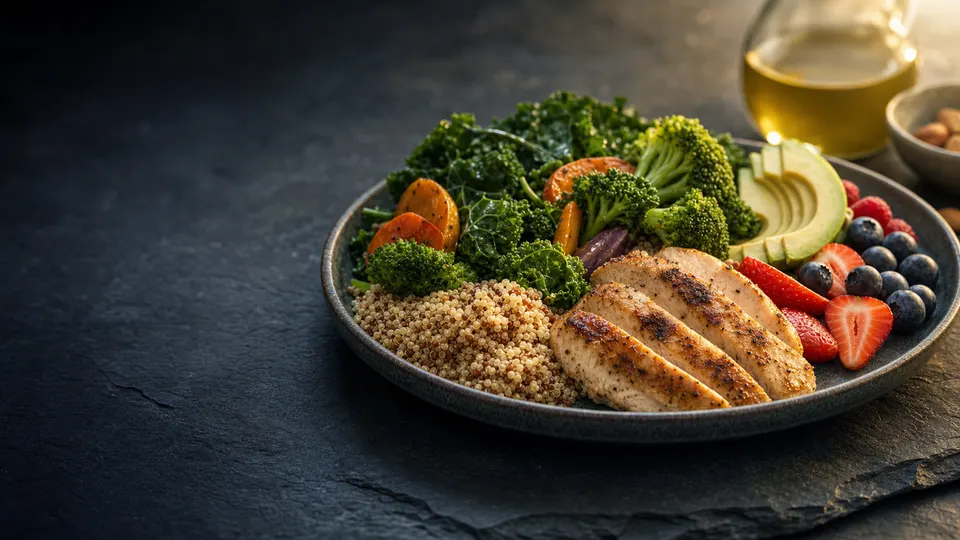
When you glance at a balanced meal, you'll see roughly:
Half your plate — vegetables and fruit
About a quarter — protein
About a quarter — whole grains or starches
Plus healthy fats — often as part of the cooking, dressing, or ingredients
These aren't measurements to weigh out. They're a visual check: when you look at your plate, can you see something protein-rich, something whole-grain or starchy, something green or colourful, and some fat? If yes, you've got the pattern. If something's missing, that's your cue.
Here's what each component does and why the combination works.
Protein
Protein keeps you full longer than carbs or fat alone — a quality called satiety. When protein reaches your gut, it triggers fullness signals to your brain and slows the rate at which food leaves your stomach. That's why a meal with protein satisfies you for hours, while the same calories of carbs alone can leave you hungry within an hour.
Protein is also the raw material for muscle, skin, hair, and immune cells. And when you eat it alongside carbohydrates, it helps blunt the blood-sugar spike that carbs can cause on their own.
Sources: chicken, fish, eggs, beans, lentils, tofu, Greek yogurt, cottage cheese, nuts. Beans and legumes bring fiber alongside protein, making them especially filling.
A useful rule of thumb: a protein source about the size of your palm at lunch and dinner, a smaller amount at breakfast. This isn't a measurement — it's a visual anchor that usually works.
Whole Grains and Starches
Carbohydrates are your body's primary fuel. Your brain runs on glucose, and so do your muscles during movement. The question isn't whether to eat carbs — it's what kind.
Whole grains (oats, brown rice, whole-wheat bread, quinoa) retain the fiber and nutrients that refined grains lose during processing. That fiber slows glucose absorption in your small intestine, meaning sugar enters your bloodstream gradually instead of all at once. The difference is practical: a bowl of oats gives you steady energy for hours; a sugary cereal sends your blood sugar up fast, triggering an insulin response that can overshoot and leave you tired and hungry an hour later.
Foods that deliver more nutrients per calorie are called nutrient-dense, and whole grains are a clear example. Refined carbs (white bread, white rice, sugary cereals) aren't harmful in small amounts, but they digest quickly and don't keep you full — which makes balance harder to maintain.
The practical upgrade: make whole versions the more common choice. You don't need to eliminate refined grains — just don't make them the default.
Vegetables and Fruit
Vegetables and fruit are technically carbohydrates, but they deserve their own category on the plate because of what they bring beyond energy: fiber, vitamins, minerals, and compounds linked to lower inflammation in large studies. They're also low in calories relative to how filling they are — you're unlikely to overeat broccoli the way you might overeat chips.
The fiber in plants does more than keep you regular. Soluble fiber (found in oats, beans, apples) feeds your gut bacteria, which in turn produce compounds that support gut lining health and may reduce inflammation. Insoluble fiber (whole grains, many vegetables) adds bulk and speeds transit through your digestive tract. Both types help you feel full and slow glucose absorption, reinforcing the steady-energy pattern.
If you remember one rule from this article: half your plate is plants, most of the time. This single habit covers more ground than any other change you could make.
Healthy Fats
Fat makes up a significant portion of your brain tissue. Your hormones are built from fat. Fat helps you absorb the fat-soluble vitamins A, D, E, and K — which is why a salad dressed with oil delivers more usable nutrients than the same salad bare. And fat makes food satisfying, keeping you from being hungry again soon after eating.
The type of fat matters:
Unsaturated fats (olive oil, avocado, nuts, fatty fish) — the carbon chains have gaps where hydrogen is missing, which changes how the body processes them. They support heart and brain health and are the fats to reach for most often.
Saturated fats (butter, coconut oil, fatty meat) — the carbon chains are fully “saturated” with hydrogen, making them more solid at room temperature. Regularly eating large amounts is linked to higher LDL cholesterol.
Trans fats — artificial trans fats (partially hydrogenated oils) have been largely removed from food supplies in the US and EU, but small amounts may still appear in some processed foods. They damage cardiovascular health and are worth minimizing. Naturally occurring trans fats in dairy and meat behave differently and aren't a concern at typical intake levels.
The practical check: are you using olive oil more often than butter? Eating nuts and fish regularly? If so, your fat pattern is probably solid.
How the Parts Work Together
The four components of a balanced plate do more together than they do alone:
Protein + carbs blunts the glycemic response. The same portion of rice causes a smaller blood-sugar spike when eaten with chicken than on its own, because protein slows gastric emptying and triggers satiety signals earlier.
Fat + vegetables improves nutrient absorption. Many of the most beneficial compounds in vegetables — carotenoids in carrots, lycopene in tomatoes, vitamin K in greens — are fat-soluble. A little oil on your vegetables isn't just flavour; it's function.
Fiber + any carb slows glucose entry. This is why whole fruit (with fiber intact) gives steadier energy than fruit juice (where fiber has been removed), even when the sugar content is similar.
These combinations are why a balanced meal satisfies you for hours while a single-component snack — even with the same calories — often doesn't.
Highly Processed Foods and Balance
Highly processed foods are engineered to be hyper-palatable: designed with combinations of salt, sugar, fat, and texture that override your natural satiety signals and make you want to keep eating. They're also typically low in fiber and nutrients. A bag of chips or a sweet snack bar can displace a balanced meal without leaving you full — which is why they make balance harder. Not because they're “bad,” but because they crowd out the foods that actually support how you feel.
If most of your meals come from a package, balance is difficult to achieve. If processed foods are occasional, they fit into an otherwise balanced pattern without issue. The useful question: are these replacing the foods your body uses, or are they in addition to them?
Common Misconceptions
“Balanced means equal parts of everything.” No. Your plate might be half vegetables, a quarter protein, and a quarter grains. Balance is flexible — it's about including all the components, not making them equal.
“I need superfoods to be healthy.” Ordinary foods — chicken, rice, beans, broccoli, apples — do the job. Consistency matters more than novelty, and there's nothing magical about expensive ingredients.
“One unbalanced meal ruins everything.” One meal is one meal. The pattern across days and weeks is what counts.
“Carbs are bad.” Carbs are your body's primary fuel. The relevant question is which carbs, how often, and in what context — not whether to eat them.
“Fat makes you fat.” Weight gain comes from consistently eating more calories than your body uses, regardless of the source. Fat is calorie-dense (about 9 kcal per gram versus 4 kcal for protein and carbs), so large portions add up quickly. But fat itself supports satiety and nutrient absorption — removing it entirely works against you.
When Balance Matters Most — and When It Matters Less
Balance matters most as your everyday pattern. If you're eating balanced meals most of the time, you're getting what your body needs — and occasional off days don't change that.
It matters less in specific moments: a single meal, a busy travel day, a holiday. These don't define your pattern. What defines it is what you eat most of the time, most days.
The pattern also shifts with context. An athlete in training needs more carbs than someone who sits most of the day. A growing teenager needs different proportions than an older adult. Pregnancy, illness, and activity level all change what “balanced” looks like for you. The four components stay the same — protein, whole grains, plants, fat — but the amounts and emphasis shift. If you're unsure what applies to your situation, a registered dietitian can help you calibrate.
The Compact Takeaway
Glance at your plate: can you see protein, whole grains or starches, vegetables or fruit, and some fat? If yes, that's a balanced meal. If something's missing, that's the thing to add.
That's the whole model. Get these four components on your plate most of the time, and the pattern takes care of itself — because what you eat most days matters more than what you eat any single day.